segunda-feira, 11 de fevereiro de 2013

Microbial ecology, fermentation, and flavour

25 March 2013, 6:30 PM Beveridge Hall, Senate House, University of London
Tickets £15


Pathogenic microbes get all the attention. It is only now, with the advent and popularisation of sophisticated molecular methods, that benevolent microorganisms are beginning to get some of the attention they so richly deserve. From the advances of the human microbiome project (http://www.hmpdacc.org/ ) through to the resurgence of interest in naturally fermented pickles, bacteria, yeasts, and moulds lie at the cutting edge—and direct intersection—of gastronomy and science.
For this reason, we are delighted that our London Gastronomy Seminars 2013 keynote address gathers together some of the leading exponents of the fields of microbiology and culinary invention.

Drs Rachel Dutton and Ben Wolfe of Harvard University have come to prominence for their unique and original combination of research into the dynamics of microbial communities with diverse culinary applications, working with institutions including David Chang’s Momofuku, Noma, and our own Neal’s Yard Dairy.
As Harold McGee told the New York Times, “There really is no one else doing what [Rachel] is doing. Academic microbiologists have not taken an interest in small-scale fermentation, focusing on food safety rather than food quality. There is really only one person at the moment.” In keeping with our seminars’ tradition of tasting the technical, Rachel and Ben will be joined by Dan Felder, head of Research & Development for Momofuku in Manhattan’s East Village, who will speak about the novel fermentations crafted in the restaurant kitchen and about the dynamics of collaboration between chefs and academic researchers.

London Experimental Oenology Seminar


The 6th London Experimental Oenology Seminar will examine principles of food and wine pairings through the lense of South American wines and cuisine. Why do certain flavours form perfect harmony? What is the role of familiarity in these pairings and do the principles shaped by old world traditions apply to new world wines and recipes? 
 
The seminar will take place on Thursday Feb 7th at 6.30 pm, Senate House London (room number will be indicated in the lobby)  
 
The tasting of Brazilian, Chilean and Argentinian wines will be led by Barry Smith, editor of Question of Taste and founding director of teh Centre for the Study of the Senses, and accompanied  by talk and creations by young Franco-Colombian chef, Charles Michel, a visitor and collaborator at the Crossmodal Laboratory in Oxford directed by Charles Spence.    
 
Charles Michel graduated from Institut Paul Bocuse in 2006 (Culinary Arts and Restaurant Management degree). Subsequently worked at Restaurant Tetedoie (* Michelin star) in Lyon, France, and then for 2 years at Dal Pescatore (*** Michelin stars) in Canneto sull’Oglio (MN), Italy. 
Since then, Charles has been working in Colombia,  researching culinary traditions while travelling through the countryside, as well as managing his own consulting and “Chef à Domicile” brand: “Charles Cocina”. For 5 years, he has been teaching amateurs and young professionals how to cook . Recently Charles has been developing a series of immersive multisensory food/drink experiences to complement Brand marketing strategies.
 
Charles is passionate about innovative cuisine inspired in Traditions and Art, using neuroscience research applied to culinary design, understanding the senses and emotions. He also has a particular interest in utilizing the latest in culinary techniques to make people think differently about the many amazing ingredients that come from his native Colombia. Currently, Charles is visiting the Crossmodal Research Laboratory in Oxford and conducting culinary research with Professor Charles Spence.

Please email back at london.experimental.oenology@gmail.com to register (20 pounds participation).

Fashion in Food

reposted from: http://www2.lse.ac.uk/publicEvents/events/2013/03/LitFest20130302t1500vSZT.aspx

ClientEarth LSE Literary Festival event

Date: Saturday 2 March 2013
Time: 3-4.30pm
Venue: Sheikh Zayed Theatre, New Academic Building
Speakers: Claude Fischler, Matthew Fort, Geetie Singh, Carl Warner
Chair: James Thornton
Food is something of an obsession in contemporary culture, with 'celebrity' chefs topping the bestseller lists and pop-up restaurants and foodie blogs the height of cool. But are we thinking about food in the right way? Food shortages are predicted to be the next major world crisis, and obesity and eating disorders increasingly test our health services. Do campaigns to encourage sustainable healthy eating make any difference? This panel will explore international attitudes to food.
Claude Fischler is director of Research at CNRS, the national research agency of France, and heads the Interdisciplinary Institute for Contemporary Anthropology, a research and graduate studies unit of Ecole des Hautes Etudes en Sciences Sociales in Paris.  His main area of research is a comparative, social science perspective on food and nutrition, their role and determinants in societies and cultures.  His work covers the structure and function of cuisines, taste and preferences, body image and their evolution and change over time and space.  He has published numerous articles on these issues, as well as books including L'Homnivore, Du Vin and Manger, to be published in February 2013.
Matthew Fort was Food and Drink editor of the Guardian from 1989- 2006. He has written for a wide variety of British, American and French publications. In 1992 he won the title of Glenfiddich Food Writer of the Year and, in 1993, Glenfiddich Restaurant Writer of the Year, as well as The Restaurateurs’ Association Food Writer of the Year. He was Glenfiddich Cookery Writer of the Year in 2005. He has written three books on food, the third of which, Eating Up Italy, was the Guild of Food Writers Book of the Year in 2005, and his fifth, Sweet Honey, Bitter Lemons, a food portrait of Sicily, won the Premio Sicilia Madre Mediterranea in 2009. Recent television series include Greatest Dishes in the World (Sky; 2005); The Forager’s Field Guide (ITV; 2005). He co-presented Market Kitchen (UKTVFood) with Tom Parker Bowles until 2010. Currently he’s a judge on The Great British Menu (BBC2; 2006, 2008, 2009, 2010, 2011,2012, 2013).
Geetie Singh MBE is managing director and founder Duke of Cambridge organic pub. Geetie set up the Duke of Cambridge in 1998 to be the UK’s first organic gastropub, and it has been an outstanding success, regarded as one of the top places to eat out in London. It is the first and only gastropub in the country to be accredited by the Soil Association. Geetie and the pub have received many prestigious awards, including Asian Woman of Achievement, Business Woman of the Year, Time OutEvening Standard and Observer.
Carl Warner is a professional still life photographer with a studio in London, and has worked in the advertising industry for more than 20 years.  Over the past ten years he has been developing a body of work making landscapes out of food. This work has been featured in magazines and newspapers all over the world, as well as advertising campaigns and commissions from some of the biggest brand names in the food industry. His book Carl Warner's Food Landscapes is published by Abrams Image. 
James Thornton is an environmental lawyer, social entrepreneur, and the founding CEO of ClientEarth. James founded ClientEarth - Europe’s first public interest environmental law organisation - in 2007. Now operating globally, it uses advocacy, litigation and research to address the greatest challenges of our time - including biodiversity loss, climate change, and toxic chemicals. The New Statesman has named him as one of 10 people who could change the world.
This event forms part of LSE's 5th Space for Thought Literary Festival, taking place from Tuesday 26 February - Saturday 2 March 2013, with the theme 'Branching Out'.
Suggested hashtag for this event for Twitter users: #LSElitfest

Ticket Information

All events in the Literary Festival are free and open to all, but an e-ticket is required.  Tickets can be booked via LSE E-Shop(via Product Catalogue- Conference and Events- LSE Space for Thought Literary Festival 2013).  You can book up to 2 tickets per person per event.  You will need to register with LSE E Shop before booking, but this should only take a few moments.  If you have booked tickets for previous Festivals, you should already be registered.
For any queries email events@lse.ac.uk
From time to time there are changes to event details so we strongly recommend that if you plan to attend this event you check back on this listing on the day of the event.

Podcasts

We aim to make all LSE events available as a podcast subject to receiving permission from the speaker/s to do this, and subject to no technical problems with the recording of the event. Podcasts are normally available 1-2 working days after the event. Podcasts and videos of past events can be found online

CPD

This event has been certified for CPD purposes by the Continuing Professional Development Certification Service. It is the responsibility of delegates to register their details with a LSE event steward at the event in order to obtain a CPD certificate of attendance. If a delegate fails to register their details at the event, it will not prove possible to issue a certificate. Certificates of attendance will be emailed  out within 10 working days of the event.

Twitter and Facebook

You can get immediate notification on the availability of an event podcast by following LSE public lectures and events on Twitter, which will also inform you about the posting of transcripts and videos, the announcement of new events and other important event updates. Event updates and other information about what's happening at LSE can be found on the LSE's Facebook page.

Accessibility

If you are planning to attend this event and would like details on how to get here and what time to arrive, as well as on accessibility and special requirements, please refer toComing to an event at LSE

First International Conference on Global Food Security

29 September - 2 October 2013, Noordwijkerhout, The Netherlands

The First International Conference on Global Food Security aims to deliver state-of-the-art analysis, inspiring visions and innovative research methods arising from interdisciplinary research. Join us in this exciting opportunity to ensure that the best science is garnered to support the emergence of the Sustainable Development Goals.
Achieving global food security whilst reconciling demands on the environment is the greatest challenge faced by mankind. By 2050 we will need to feed 9 billion people. The urgency of the issue has led to huge scientific strides forwards; making it difficult to keep up with the rapidly expanding volume of scientific research.
We aim to better understand economic, social, biophysical, technological and institutional drivers of current and future global food security.
Topics List
  • Global and local analyses of food security
  • Enabling trade and market policies for local and global food security
  • Sustainable intensification of food production systems
  • Novel ways of feeding 9 billion
  • Learning from the past to understand the future
  • Land sparing, land sharing and trade-offs
  • Agricultural production as feedstock for renewables
  • Lost harvest and wasted food
  • Nutritional security
  • Labelling, certifying and striving for quality and sustainability of food production

For more information, see: http://www.globalfoodsecurityconference.com

Third International Conference on Food Studies: An Interdisciplinary Conference


University of Texas
Austin, Texas USA
15-16 October 2013

Conference Focus

The International Conference on Food Studies travels to Austin, Texas in 2013, where local and sustainable food production is a cornerstone of the Austinite culture.   A city rich with a dedicated community of locavores, some of the country’s longest running farmers markets, and numerous slow foods advocate groups, Austin is an ideal location for the discussion of all the dimensions of food studies including agricultural, environmental, nutritional, health, social, economic and cultural perspectives on food.
The Conference will address a range of critically important issues and themes relating to the Food Studies community. Plenary speakers include some of the leading thinkers in these areas, as well as numerous paper, colloquium and workshop presentations.
We are inviting proposals for paper presentations, workshops/interactive sessions, posters/exhibits, or colloquia (See Proposal Types).   Proposal ideas that extend beyond these thematic areas will also be considered.  For more information about the ideas and themes underlying this community, see Our Focus.
Virtual participation is available for those who are unable to attend the conference in person. Proposals for virtual presentations may be submitted at any time, up to the start of the conference.  All conference registrants (in-person and virtual) may also submit their written papers for publication in the refereed Food Studies: An Interdisciplinary Journal.

Submit a Conference Proposal

To learn more aobut preparing and submitting your conference proposal, including guidelines, deadines, and "how-to" information, go to Submitting Your Work: Conference Presentations.

Conference Details

To learn more about the conference, including speakers, session formats, venue, registration, and the like, stay in The Conference section of the website and use the navigation bar on the left to access desired information.

For more information, and live links, see: http://food-studies.com/the-conference/call-for-papers


This message has been forwarded by the SOAS Food Studies Centre

terça-feira, 29 de janeiro de 2013

Gendering Food Security


Friday 8 February
2-5pm, Wolfson ResearchExchange, room 2.
Speakers include:
Stephanie BarrientosSchool of Environment and Development, University of Manchester.
Women farmers and workers in Gender Production Networks: Surviving the Cocoa-Chocolate Sourcing in Ghana and India.
Jessica DuncanCentre for Food Policy, City University London.
Women livestock keepers and the white Revolution: Assessing the impacts of dairy coops on the pastoralists of Gujurat, India.
Stefanie LempkeDepartment of Gender and Nutrition, Institute for Social Sciences in Agriculture, University of Hohenheim.
Food Security, sustainable livelihoods and gender in South Africa.
Lopamudra Patnaik Saxenaindependent academic researcher and consultant.
Gender, Climate Change & Food Security in South Asia.

Entrance is free but please email d.butler@warwick.ac.uk if you would like to attend

segunda-feira, 28 de janeiro de 2013

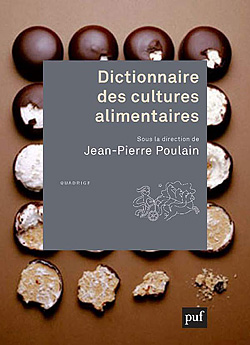
Dictionnaire des cultures alimentaires (Dicionário das culturas alimentares)


Sociólogo, Jean-Pierre Poulain é professor da Universidade de Toulouse Le Mirail (Centre d'Études et de Recherche Travail Organização Pouvoir). A Editora Puf também publicou a sua Sociologie de l'obésité.

Este dicionário é o primeiro a revelar a diversidade e riqueza de significados abrangida por todos os aspectos da comida e alimentação.
Pensar sobre este assunto nos leva diretamente ao coração da dialética social e cultural: os produtos caseiros e a globalização, da padronização à autenticidade dos alimentos, do simbólico e do real, da animalidade e da humanidade.

Mas também temos de situá-lo, oscilando entre extremos tais como dádiva e privaçao, ajuda e arma, desnutrição e obesidade, o pensamento indisciplinado e a racionalidade industrial, nutriçao-genética e nutri-genômica, a doença da vaca louca e os vegetarianos , gastronomia e fast-food, a necessidade básica e o ritual religioso sofisticado ... em resumo a partir da incorporação da identidade individual quando comemos, afirmamos o nosso pertencimento a uma cultura.

Mais de 230 estudos, escritos por 162 especialistas de uma grande variedade de horizontes linguísticos e domínios científicos complementares (antropologia, sociologia, medicina, história das religiões, psicologia, direito, economia, história, geografia, política internacional de saúde ...) compõem o menu do Dicionário de Alimentos e culturas alimentares.


Dirigé par Jean-Pierre Poulain, aux Presses Universitaires de France

Voici un ouvrage important, pour amateurs avertis seulement. On y traite du fait alimentaire et de ses multiples aspects tels sociologique, ethnique, historique, religieux, économique, agrono­mi­que et médical, entre autres. On se rend enfin compte de l'importante de l'aspect culturel de l'alimentation. Je me souviens dans les années 1970, avoir contacté la ministre de la Culture du Québec concernant l'aspect culturel de l'alimentation, ce dont j'étais déjà parfaitement convaincu à cette époque. Je me suis fait répondre que ce «fait alimentaire» ne dépendait pas de son ministère! Bon… Et voilà que des scientifiques, des chercheurs, des ethnologues, des professeurs d'université, des théologiens, des économistes, etc., de calibre international se mettent ensemble pour rédiger cet ouvrage monumental qui démontre justement que tout cela est bien culturel.

Cet ouvrage est donc une première par son approche multidisciplinaire et représente un grand pas dans l'évolution de la gastronomie et la connaissance de l'être humain à travers elle.

Thierry Debeur - critique gastronomique canadien, autheur de le Guide Debeur 2013. http://www.debeur.com/site/


Sociologist, Jean-Pierre Poulain is a Professor at the University Toulouse Le Mirail (Centre d’Études et de Recherche Travail Organisation Pouvoir). Puf published his Sociologie de l’obésité.

This dictionary is the first to reveal the diversity and the richness in meaning covered by all aspects of food and eating.
Thinking about this subject naturally takes us straight to the heart of social and cultural dialectics: those of home-grown produce and globalization, of authenticity and food standardization, of the symbolic and the real, of animality and humanity.

But we also have to situate it, oscillating between extremes such as giving and depriving, aid and weapon, malnutrition and fattening, undisciplined thinking and industrial rationality, nutri-genetics and nutri-genomics, the herbivorous and mad cow disease, gastronomy and fast-food, the basic need and the sophisticated religious rite… in brief, from incorporation to individual identity: when we eat, we signify our belonging to a culture.


More than 230 studies, written by 162 specialists from a wide variety of linguistic horizons and complementary scientific domains (anthropology, sociology, medicine, history of religions, psychology, law, economy, history, geography, international health policy…) make up the menu of the Dictionary of Food and Eating Cultures.